EDDINGTON THREAD - Made in USA Sewing Thread

Eddington Thread

Beginning in 1946, Eddington Thread was created as a small family-owned company engineering industrial filament threads to the Philadelphia area. Throughout the years, Eddington’s products would go on serve industries such as military, automotive, aerospace and sporting goods (just to name a few). Under one roof, we accommodate all processes necessary to establish quicker turnaround times than any major manufacturer. From winding through packaging, Eddington provides top of the line products reflecting our two main goals – Pride & Quality.

By maintaining modern practices – Eddington’s unique finishes and top-performing bonding techniques ensure a quality product and overwhelming customer satisfaction. We commit to educating our facility on recent research and development practices to preserve the Eddington legacy. With pride in our craftsmanship, the Eddington team works together to provide excellent guidance and quick delivery times. By applying unique finishes, our products eliminate the fear of burning and breaking at the needle. Furthermore, our bonding techniques are applied under extreme heat conditions, becoming one with the thread, and protecting it from extreme sewing conditions.

Hand & Threads - SocMed.jpg

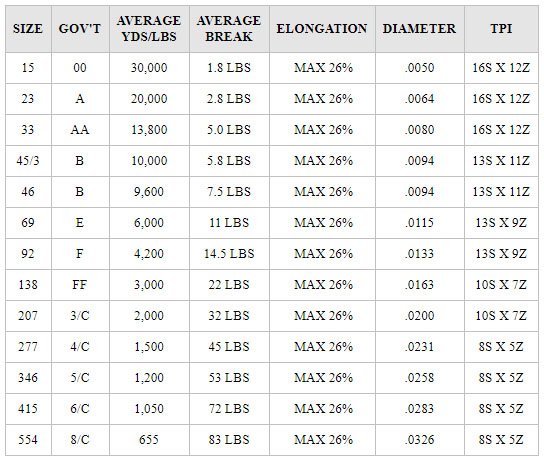
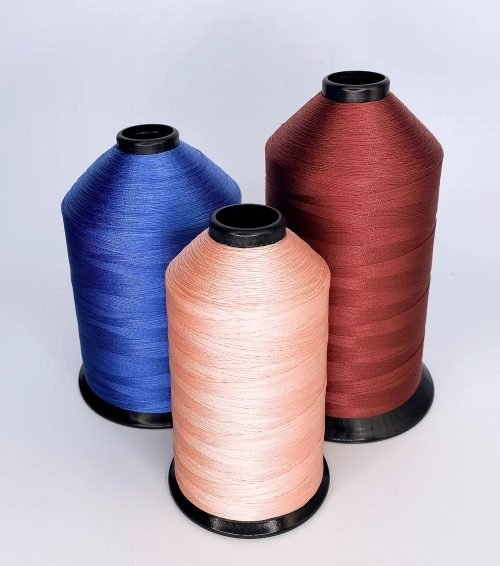
BONDED NYLON THREAD

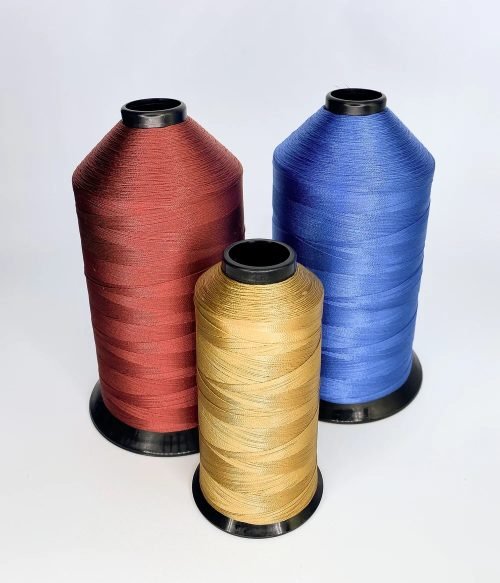
Nylon offers superior strength and excellent resistance to chemicals, mildew and abrasion. With UV inhibitors built into the yarn, Nylon is the logical choice for outdoor usage.

Eddington applies special sewing finishes to the thread to eliminate burning and breaking at the needle. For tougher sewing situations Eddington’s bond has been a proven performer. Our bond is applied to the thread under extreme heat. This allows the bond to become one with the thread and protects the thread under extreme sewing circumstances leaving the user with perfect looking seams.

Also available is right twist thread for double needle machines, water-repellent finishes, and non-silicone thread favored by the filtration industry. The thread is packaged on a 4 oz, 8 oz, 1 LB, 2 LB, and 4 LB KS or paper cones, braider tubes or pencil tubes.

Eddington Cotton Thread

Effect of Heat:  Sticks at 445° Fahrenheit.   Melts at 485° to 500° Fahrenheit.  Yellows slightly at 300° Fahrenheit when held for 5 hours.
Effects of Bleaches and Solvents
 Can be bleached in most bleaching solutions. Generally insoluble in most organic solvents. Soluble in some phenolic compounds.
Effects of Acids & Alkalis
 Unaffected by most mineral acids, except hot mineral acids. Dissolves with partial decomposition in concentrated solutions of hydrochloric, sulphuric, and nitric acids. Soluble in formic acids. Substantially inert in alkalis.
Effects of Mildew, Aging, Sunlight & Abrasion
 Excellent resistance to mildew, aging and abrasion. Prolonged exposure to sunlight causes some deterioration.
Dyes Used
:  Disperse, acid and premetalized are usually preferred, but most other classes are allowed.

ed_poly

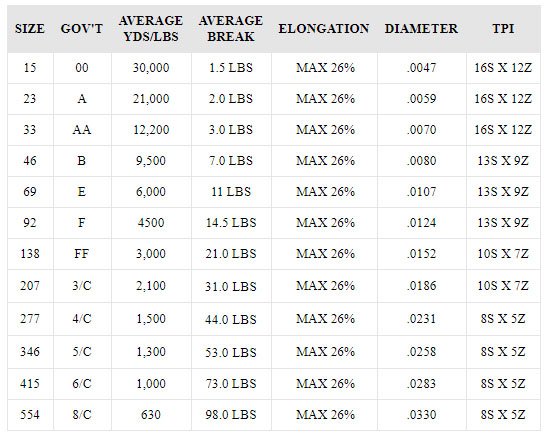
BONDED POLYESTER THREAD

Polyester offers superior strength and excellent resistance to chemicals, mildew and abrasion. With UV inhibitors built into the yarn, Polyester is the logical choice for outdoor usage.

Eddington applies special sewing finishes to the thread to eliminate burning and breaking at the needle. For tougher sewing situations Eddington’s bond has been a proven performer. Our bond is applied to the thread under extreme heat. This allows the bond to become one with the thread and protects the thread under extreme sewing circumstances leaving the user with perfect looking seams.

Also available is right twist thread for double needle machines, water-repellent finishes, and non-silicone thread favored by the filtration industry. The thread is packaged on a 4 oz, 8 oz, 1 LB, 2 LB, and 4 LB KS or paper cones, braider tubes or pencil tubes.

Effects of Heat:  Sticks at 440° to 445° Fahrenheit. Melts at 483° Fahrenheit.
Effects of Bleaches and Solvents
 Excellent resistance to bleaches and other oxidizing agents. Generally insoluble except in some pheolic compounds.
Effects of Acids and Alkalis
:  Good resistance to most mineral acids. Dissolve with partial decomposition in concentrated solutions of sulphuric acids. Good resistance to weak alkalis. Moderate resistance to strong alkalis at room temperature. Disintegrate in strong alkalis at boil.
Effects of Mildew, Aging, Sunlight & Abrasion
:  Not weakened by mildew, excellent resistance to aging and abrasion. Prolonged exposure to sunlight causes some strength loss.
Dyes used
:  Disperse developed and cationic (for some types), with carrier or at high temperatures.

ed_kevlar_thread

KEVLAR THREAD

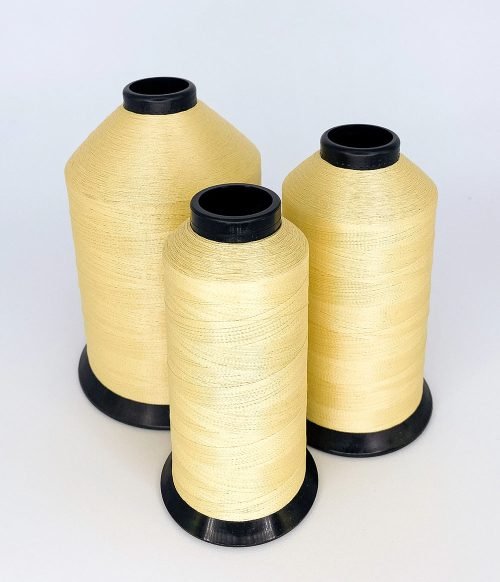
Kevlar® is a durable, heat resistant sewing thread making it ideal for extreme heat and high stress situations. Kevlar® does not melt and will not begin decomposing until it reaches 800° Fahrenheit or greater.


* Kevlar® , Nomex® and Teflon® are registered trademarks of Dupont Co.

Decomposition: Begins to decompose at about 800° Fahrenheit, in air by oxidation.
Melting Point
: Does not melt.
Solubility in Water
: Insoluble in water.
Odor
: Odorless
Color
: Natural Color Only (Yellow)
Effects of Acids & Alkalis
: Good resistance to dilute acids and bases. Degraded by strong mineral acids and to lesser extent, by strong mineral bases.
Effects of Bleach & Solvents
: Should not be bleached. Excellent solvent resistance.
Resistance to Mildew, Aging, Sunlight & Abrasion
: Excellent resistance to mildew & aging. Prolonged exposure to sunlight causes deterioration. Good abrasion resistance.

ed_nomex_thread

NOMEX THREAD

Nomex®* is a heat and flame resistant sewing thread that does not melt and only chars at temperatures of 675° Fahrenheit or greater. Due to this, Nomex® is an excellent choice for PPE applications and various safety garments.


*Kevlar®, Nomex® and Teflon® are registered trademarks of Dupont Co.


Decomposition: Begins to decompose at 700° Fahrenheit.
Melting Point
: Does not melt.
Effects of Acids & Alkalis
: Unaffected by most acids, except some strength loss after long exposure to Hydrochloric, Nitric, and Sulphuric acids. Generally good resistance to alkalis.
Effects of Mildew, Aging, Sunlight & Abrasion: Excellent resistance to mildew and aging. Prolonged exposure to sunlight causes some strength loss. Good abrasion resistance.

Shopping Cart
Scroll to Top